
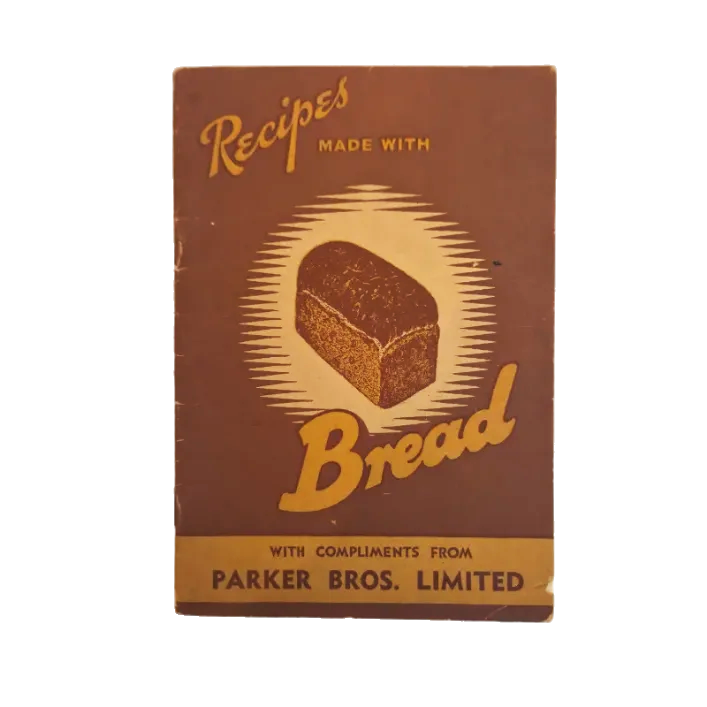
This booklet is a mid-20th-century food promotional pamphlet produced as a piece of brand advertising by Parker Bros. Limited, built around the everyday appeal of bread as a staple food.
Titled Recipes Made with Bread, it was issued not as a commercial cookbook but as a complimentary giveaway, as explicitly stated on the cover: “With compliments from Parker Bros. Limited.” Such booklets were commonly distributed through bakeries, grocers, or directly to households as a means of encouraging increased consumption of a particular brand’s bread and reinforcing brand loyalty at a time when competition among commercial bakeries was strong.
The design is firmly rooted in late 1940s to early 1950s commercial graphic style. The bold, simplified loaf of bread at the centre, surrounded by radiating lines, functions as a visual symbol of nourishment and reliability, while the warm brown and yellow colour palette evokes wholesomeness and freshness. The informal script for “Recipes” paired with heavy display lettering for “Bread” reflects contemporary advertising typography aimed at domestic consumers rather than professional cooks.
Internally, booklets of this type typically offered practical, economical recipes making use of fresh or leftover bread: puddings, savoury bakes, stuffings, fritters, and sweet dishes. The emphasis was usually on thrift, versatility, and family meals, aligning closely with post-war household values. Ingredients and methods were kept simple, reinforcing bread’s role as an essential, adaptable food rather than a luxury.
Ephemeral by nature, these pamphlets were meant for everyday kitchen use and were rarely preserved once worn or outdated. As a result, surviving examples are most often found with softened corners, creasing, staining, and general handling wear, exactly as expected for an item intended to live on a kitchen shelf rather than a bookcase.
Today, the booklet holds interest for collectors of food advertising ephemera, bakery history, and mid-century graphic design, as well as for social historians studying how manufacturers shaped domestic cooking habits through modest but effective printed promotions.