

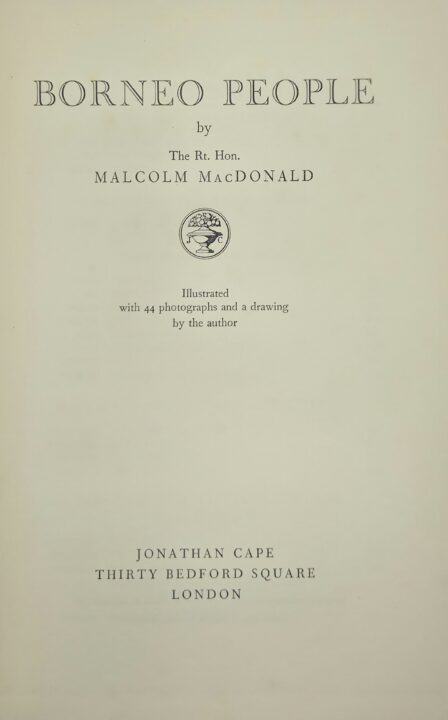
Borneo People
The book is in fair condition with the red cloth boards are fraid at the top sides and bottom of the book and faded and tanned on the cover and spine with some weakness of the hinges. Bookplate from The Book Society on the front endpaper. The text block is tight and the pages bright
$37.08
1 in stock
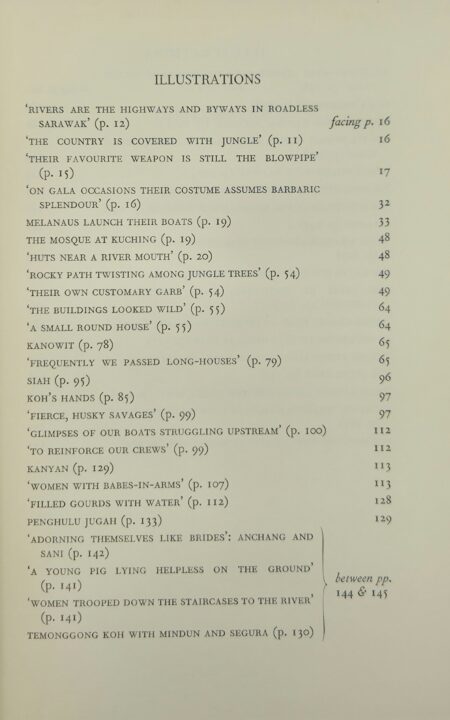
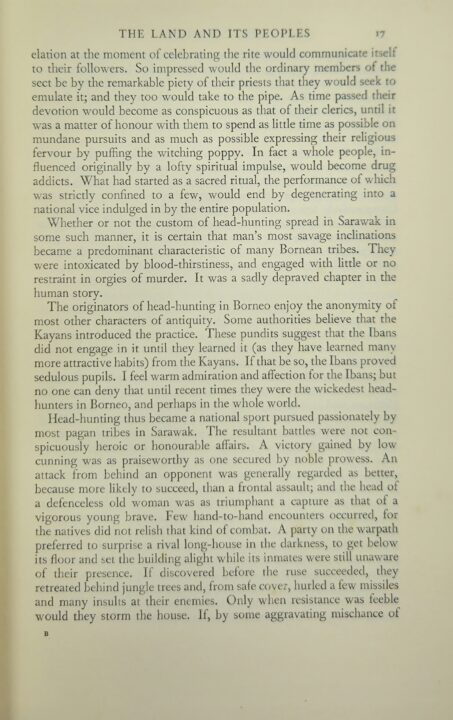
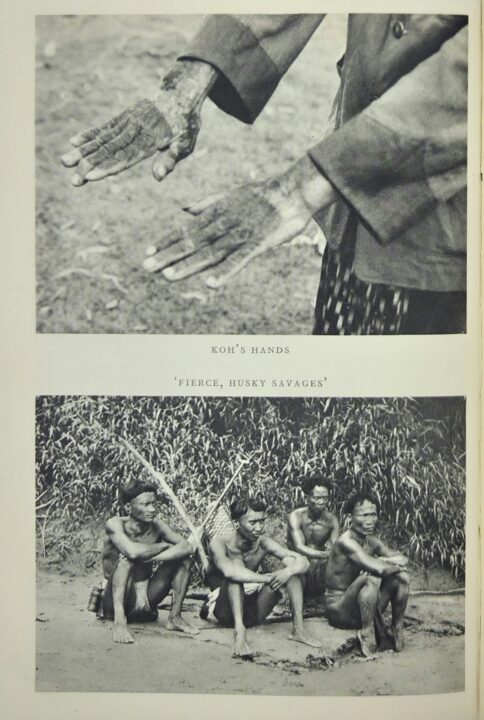
Borneo People, penned by Malcolm MacDonald in 1956, offers a sweeping and detailed portrait of the diverse ethnic groups inhabiting Borneo during a period of post-war reconstruction and emerging regional identity. Drawing on MacDonald’s experience as a British colonial administrator and diplomat, the book moves beyond surface descriptions to examine the social customs, belief systems, and everyday lives of indigenous communities across both Sarawak and British North Borneo.
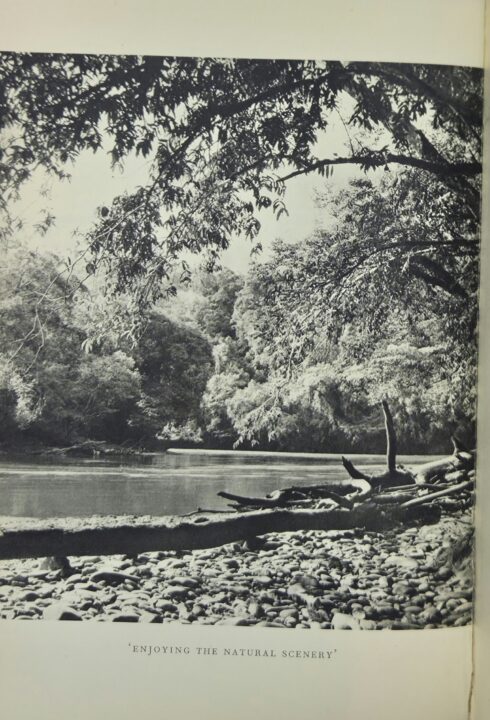
MacDonald structures his work regionally and thematically. Early chapters describe the geography of Borneo—its rivers, jungles, and coastal settlements—establishing the environmental context that shapes local livelihoods. This prepares the reader for subsequent chapters dedicated to the principal groups: the Iban, Murut, Kadazan-Dusun, and others. Within each section, he traces traditional ceremonies—such as rice harvest festivals, initiation rites, and funerary customs—and explains their cultural significance.
What sets Borneo People apart is its balancing of traditional ethnographic detail with attention to modern change. While MacDonald explores weaving techniques, animist rituals, and longhouse hierarchy, he also addresses the growing impact of schools, Christian missions, and emerging local leaders in mid-century Sabah and Sarawak. In doing so, he presents these societies not as static museums, but as dynamic communities negotiating between ancestral heritage and new social forces.
The text is supported by a wealth of first-hand observations and interviews with village elders, headmen, and ceremonial practitioners. MacDonald often includes anecdotal episodes—a welcomed guest’s entry into a longhouse, a communal feast, a shamanic invocation—that shed light on interpersonal dynamics and moral values. These stories give human scale to broader trends and help the reader sense how customs are lived, rather than merely described.
In terms of tone, the book spans scholarly and narrative registers. Detailed footnotes and references speak to MacDonald’s study of history, linguistics, and local governance, while his prose remains accessible, making the cultural material feel immediate and understandable. The pacing is deliberate: readers interested in ritual timing, kinship relations, or agricultural calendars will find ample detail; those more drawn to narrative flow will appreciate the vivid vignettes and evocative setting.
Although published in the mid-1950s, Borneo People remains valuable as a snapshot of a transitional moment in the region. It does not shy away from change: roads, trade networks, and emerging political organizations enter the picture, even as ancestral ways endure. Today, some contexts have shifted dramatically, but MacDonald’s sensitive and comprehensive account offers a foundational reference for scholars, travelers, and anyone interested in indigenous Bornean cultures.
In summary, Borneo People serves as both an ethnographic compendium and a narrative journey, recording how a mosaic of communities adapted in a moment of cultural resilience and transformation. Its blend of empirical detail and personal insight continues to provide readers with a textured window into mid‑20th‑century Borneo.
Additional information
| Weight | 732 g |
|---|---|
| Dimensions | 16.5 × 3 × 23.5 cm |
| Author | Malcolm MacDonald |
|---|---|
| Publisher | Jonathan Cape |
| Published On | 1956 |
| Country | London: United Kingdom |
| Language | English |
| Dimension | 16.5cm x 23.5cm |
| Item Weight | 732gm |
| Edition | First Edition |