
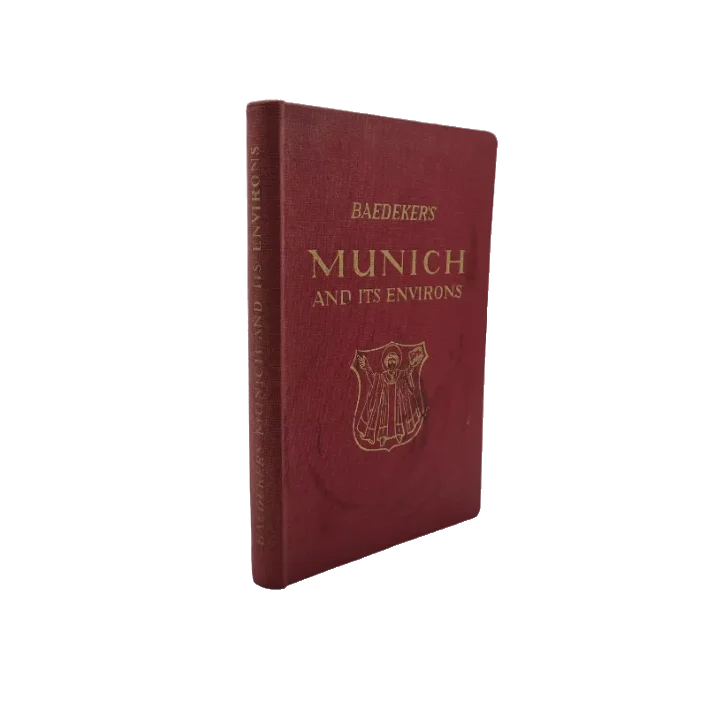
Long before mobile travel apps there was the Baedeker Guides, indispensable for helping thousands of well-to-do travellers brave the perils of abroad. Designed to be carried around in a pocket and available for handy reference by the tourist while walking about the streets of a foreign city, or hiking up a mountain, they were small, robust and easy to carry.
Karl Baedeker founded the famous “Baedeker” house in 1827. He and four generations of Baedekers after him achieved something quite extraordinary by creating a tri-lingual set of travel guides spanning 180 years and covering some forty countries.
The first English edition appeared in 1861 with the Rhine, followed by Switzerland in 1863 and Paris in 1865. With their distinctive red covers, diligently updated information and state-of-the-art maps, Baedekers grew to become an essential tool for civilised travel everywhere.
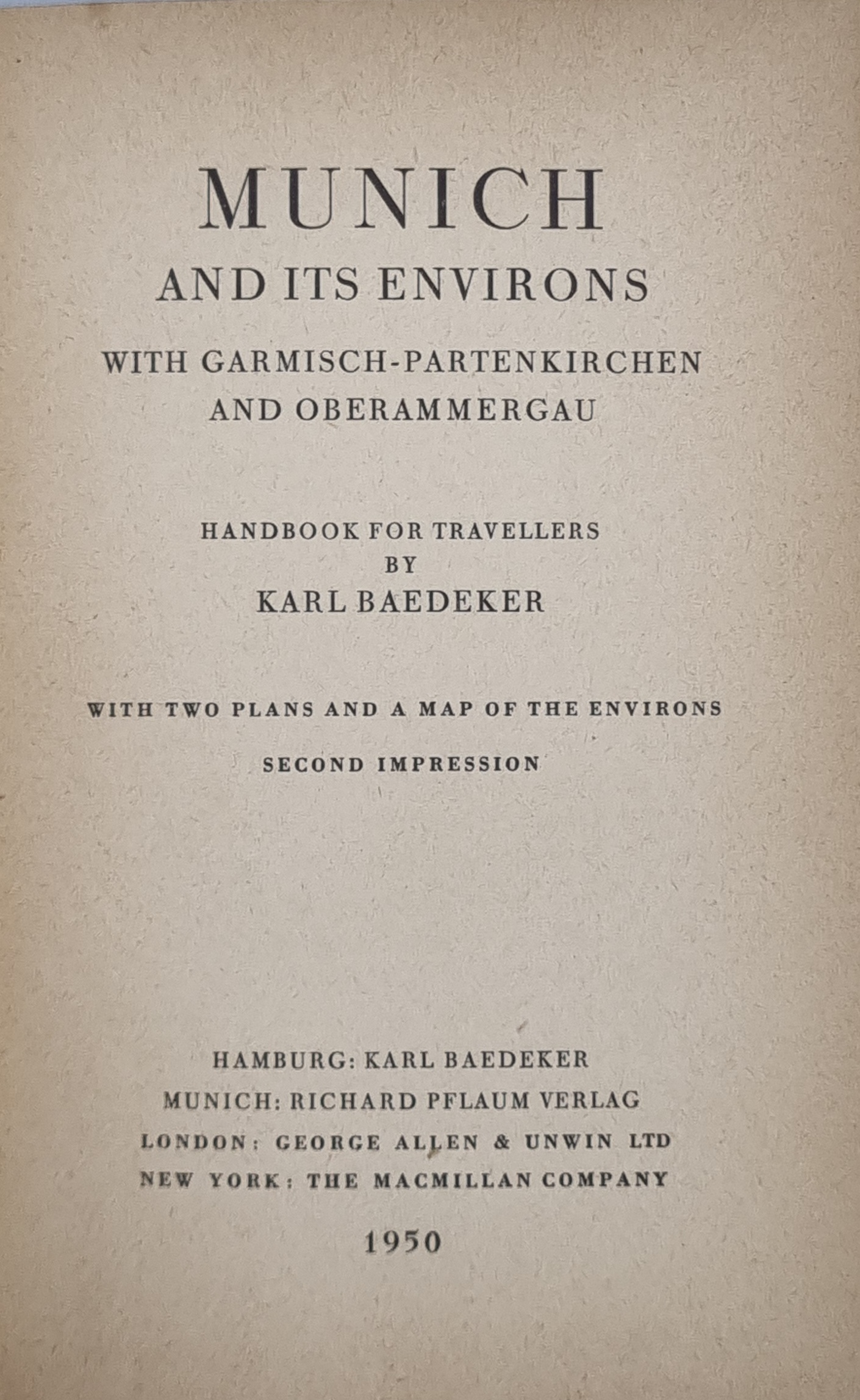
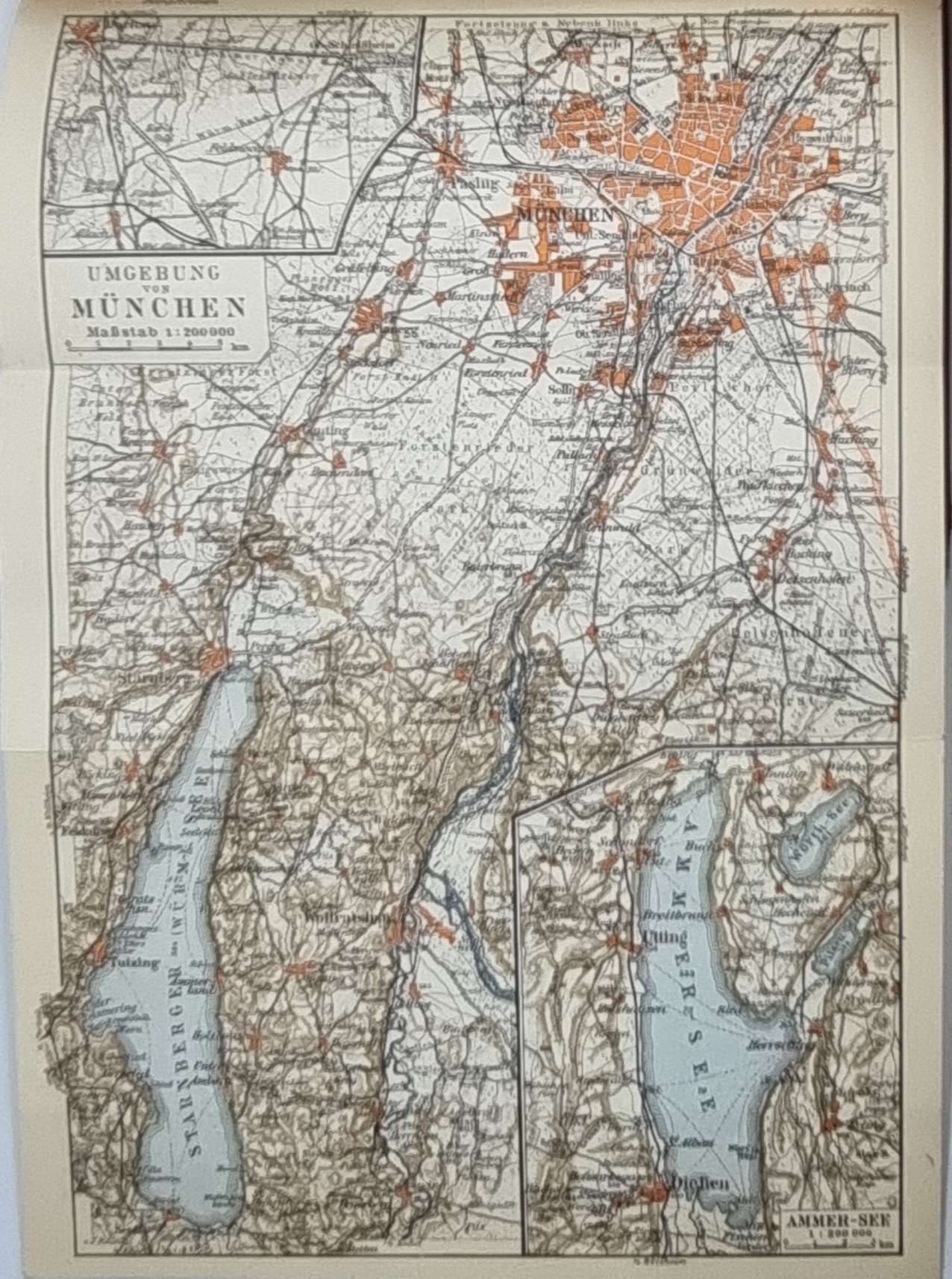
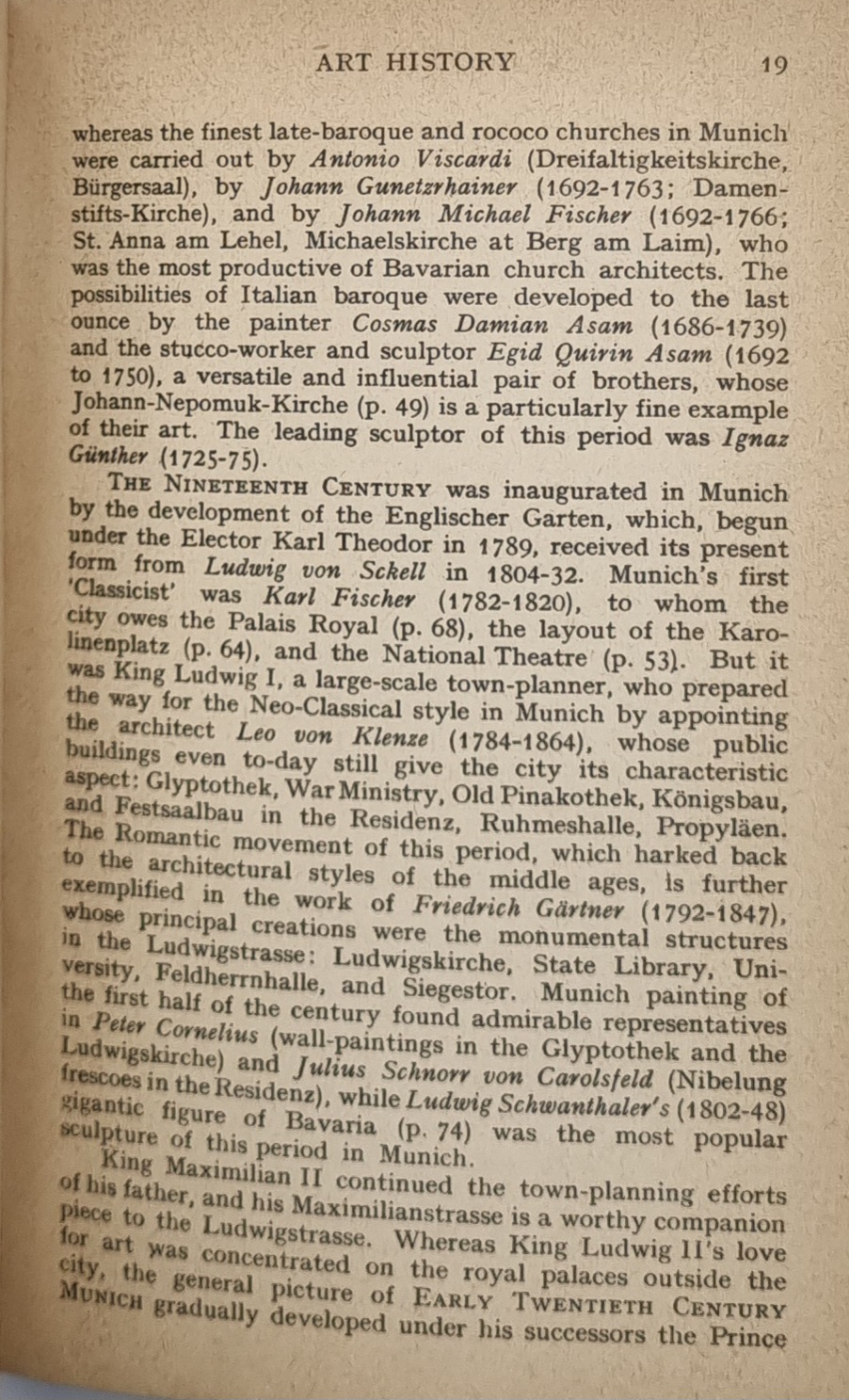
Baedeker’s Munich and Its Environs (1950) is a compact yet remarkably thorough guidebook that exemplifies the precision and reliability for which the Baedeker name has long been known. Published just a few years after World War II, this edition carries a subtle tone of resilience and recovery, capturing Munich as it stood at the crossroads of historical memory and postwar rebuilding.
The guidebook is meticulously organized, offering readers everything from brief historical overviews and cultural highlights to practical information such as transportation, accommodations, dining, and currency exchange. The structure is logical and traveler-friendly, divided by districts and key points of interest, making it easy to use while navigating the city.
What sets this guide apart is its keen sense of place. Despite being written during a time when much of Munich was still recovering from the devastation of war, the book maintains a tone of optimism and reverence for the city’s artistic and architectural legacy. Landmarks such as the Frauenkirche, the Residenz, and the English Garden are described with both clarity and admiration. Even buildings that had suffered damage are noted with updates on restoration, showing how closely the guidebook follows the evolving cityscape.
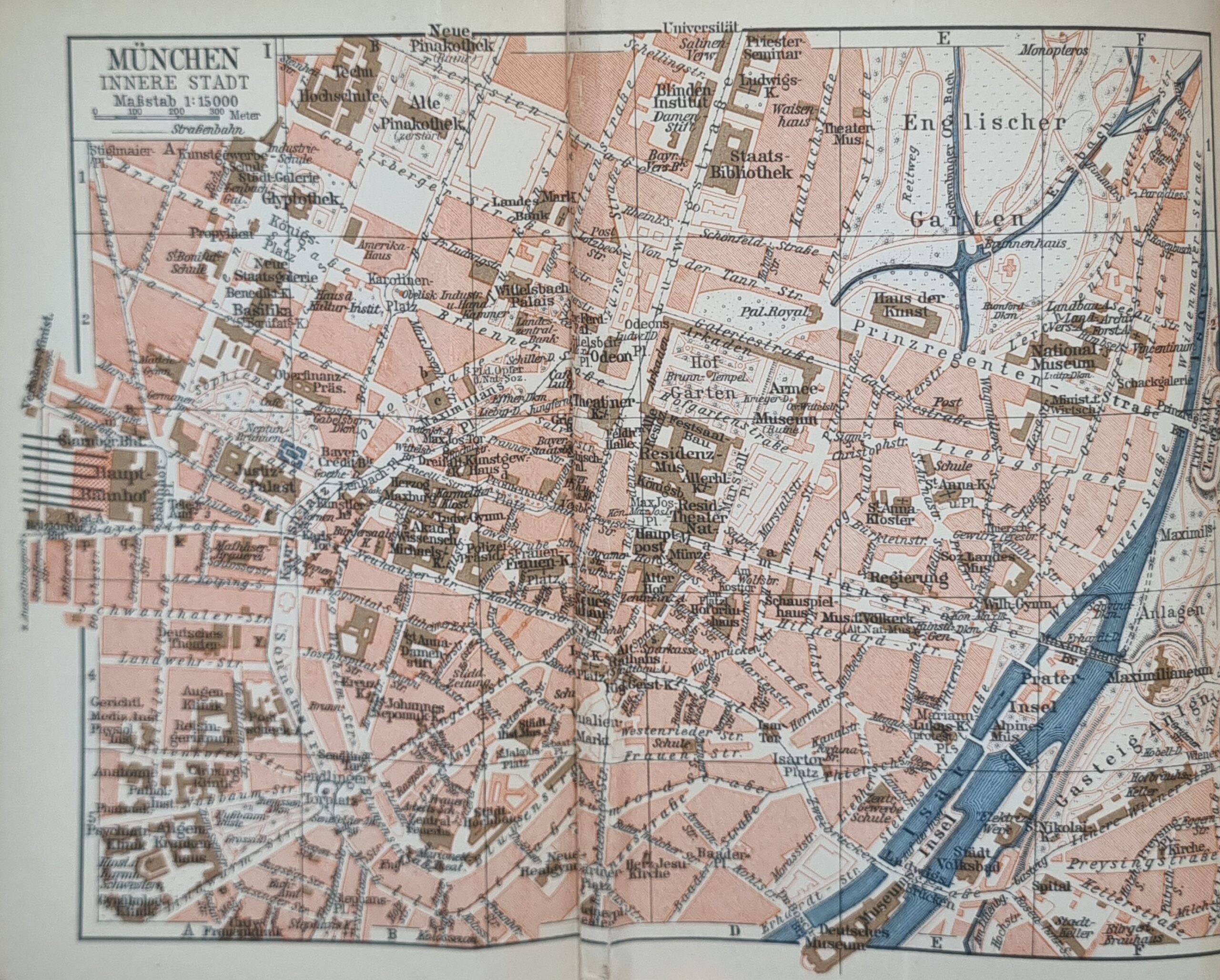
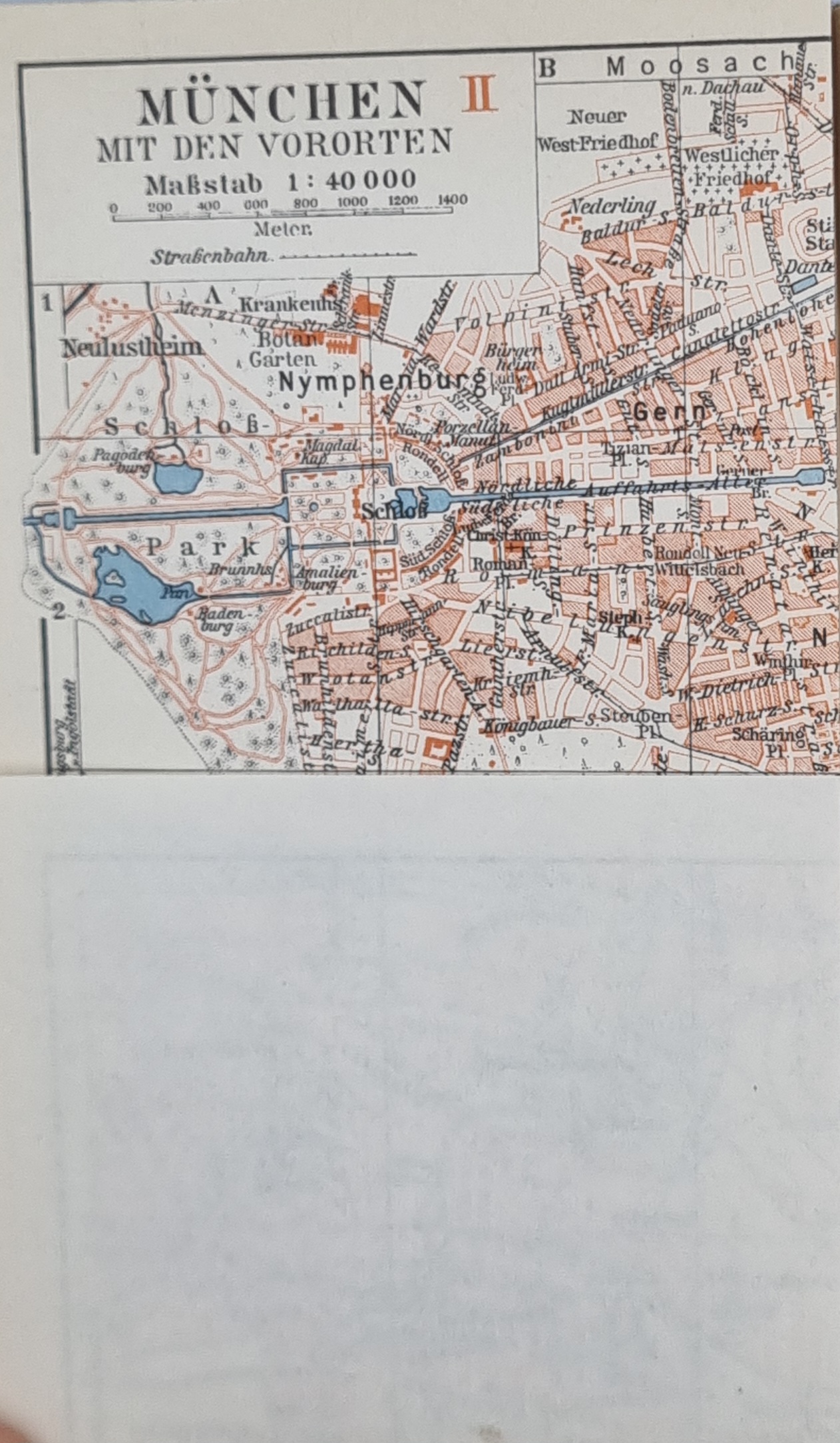
The writing is concise and factual, yet not without charm. Baedeker’s classic use of symbols, marginal annotations, and red type for highlights provides a visual guide through the text, allowing readers to quickly identify sites of major importance. This practical design is paired with detailed street maps and suggested walking routes that remain useful even today for anyone interested in historical exploration.
Cultural sections offer insight into Munich’s traditions, festivals, and contributions to music and the arts, with special attention to its role in the development of German painting and its connection to composers like Wagner and Strauss. Museums and galleries are presented with care, reflecting the city’s rich intellectual and artistic heritage.
What’s particularly poignant about the 1950 edition is its quiet resilience. There is little mention of politics or war beyond factual necessity; instead, the focus remains on Munich’s enduring spirit—its beer halls, its opera houses, and its devotion to beauty and tradition.
In all, Baedeker’s Munich and Its Environs is both a practical tool for the traveler and a time capsule of a city regaining its cultural footing. It captures Munich not just as a destination, but as a living, breathing place—steeped in history, humbled by war, yet determined to preserve its soul.
Additional information
| Weight | 126 g |
|---|---|
| Dimensions | 11 × 1 × 16 cm |
| Author | Karl Baedeker |
|---|---|
| Publisher | Karl Baedeker |
| Published On | 1950 |
| Pages | 146 |
| Country | Hamburg: Germany |
| Language | English |
| Dimension | 11cm x 16cm |
| Item Weight | 126gm |
| Edition | Second impression |