

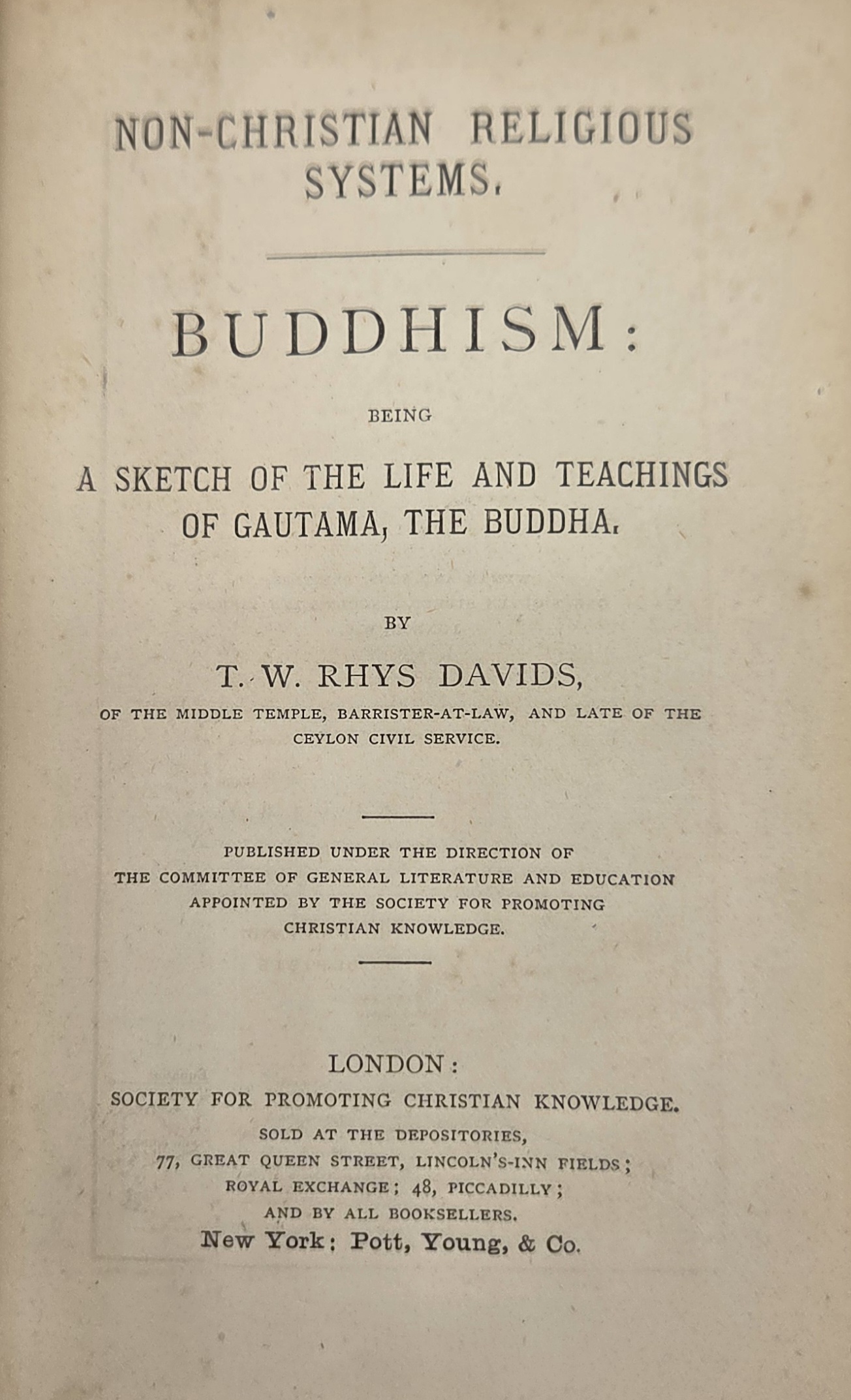
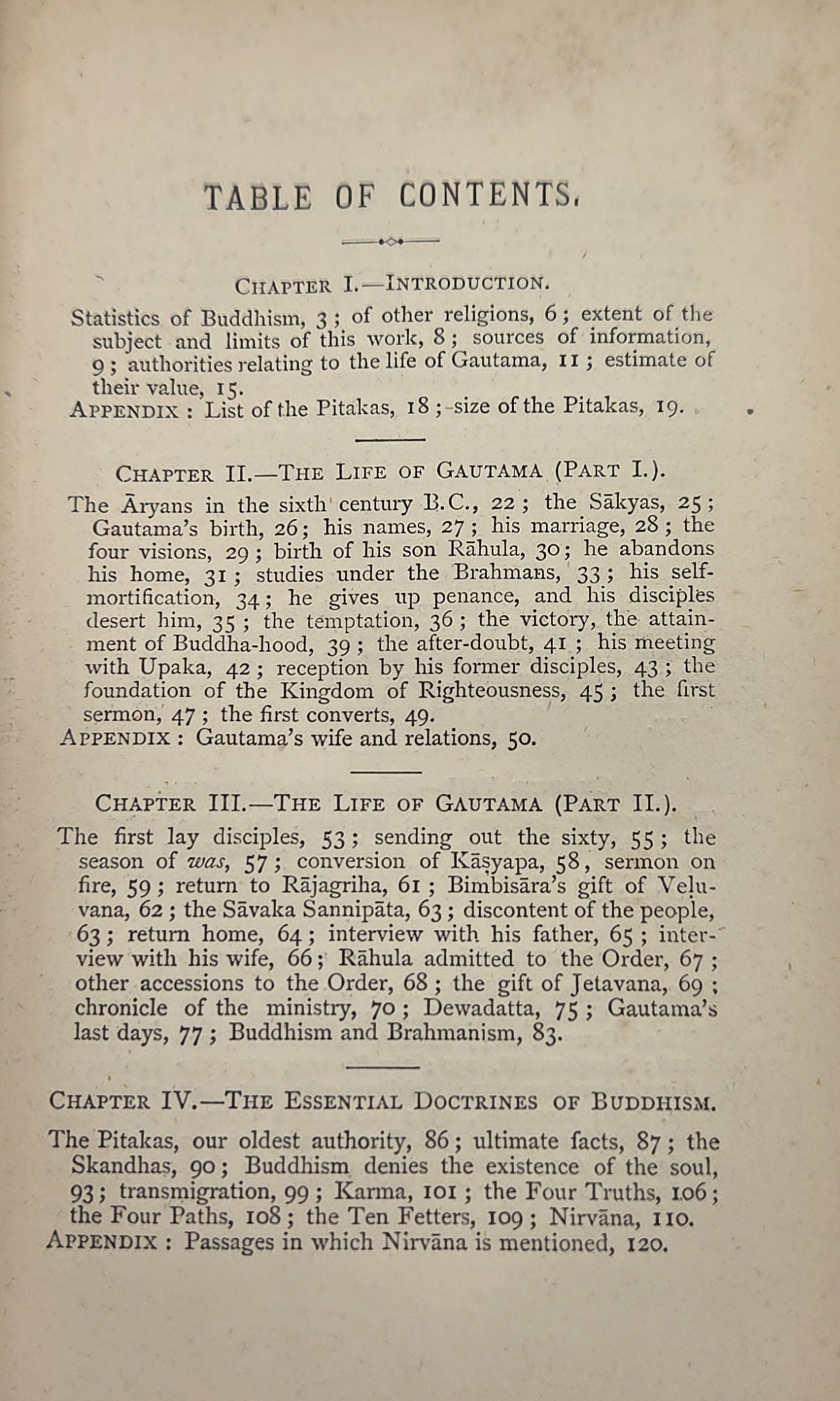
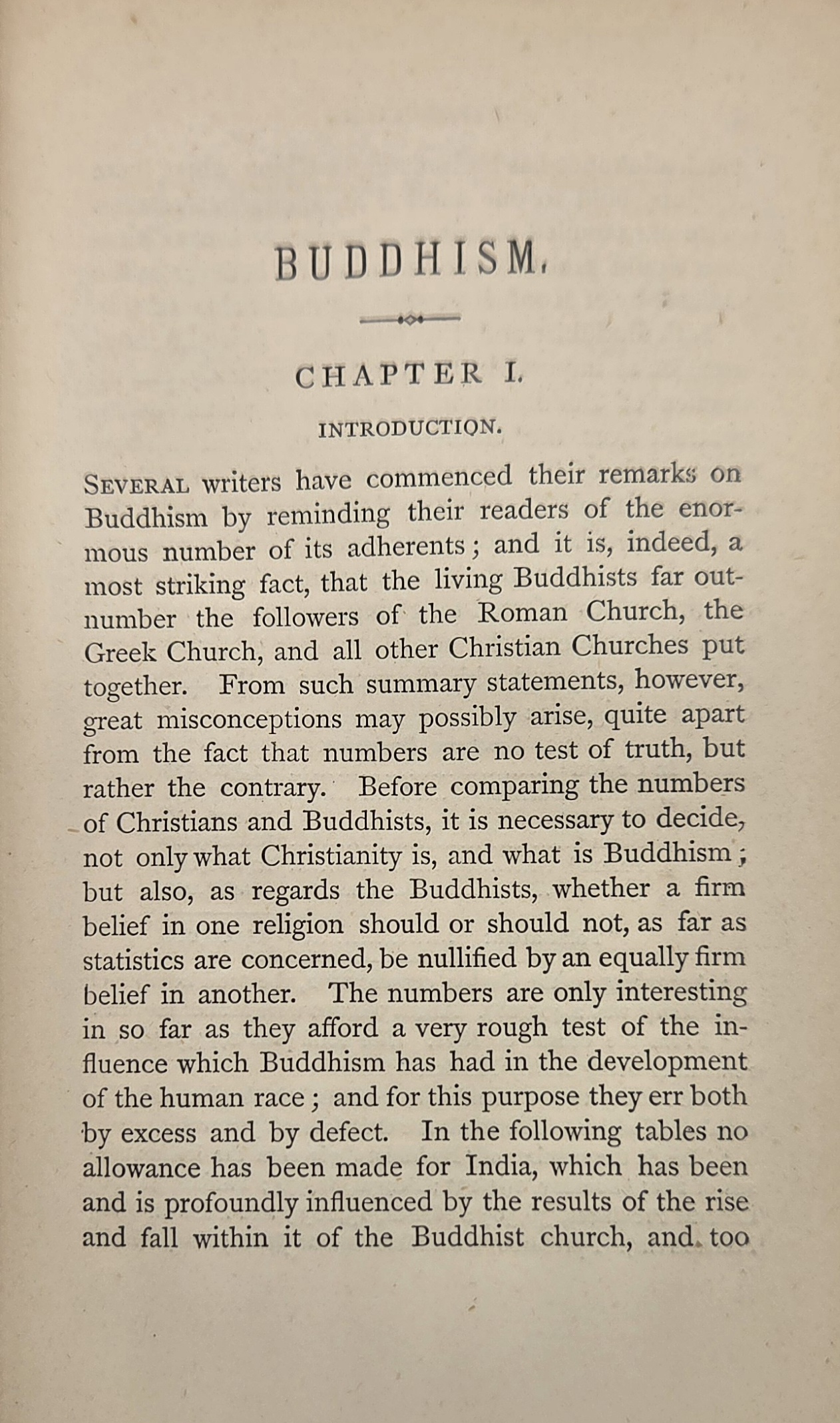
Buddhism: Being a Sketch of the Life and Teachings of Gautama, the Buddha presents a measured, scholarly narrative that introduces Buddhism through both biography and doctrine, written for Western readers encountering the tradition largely for the first time. Rather than beginning with abstract philosophy, the book opens by situating Buddhism in its historical and cultural setting in ancient India, establishing the social and religious world into which Siddhartha Gautama was born.
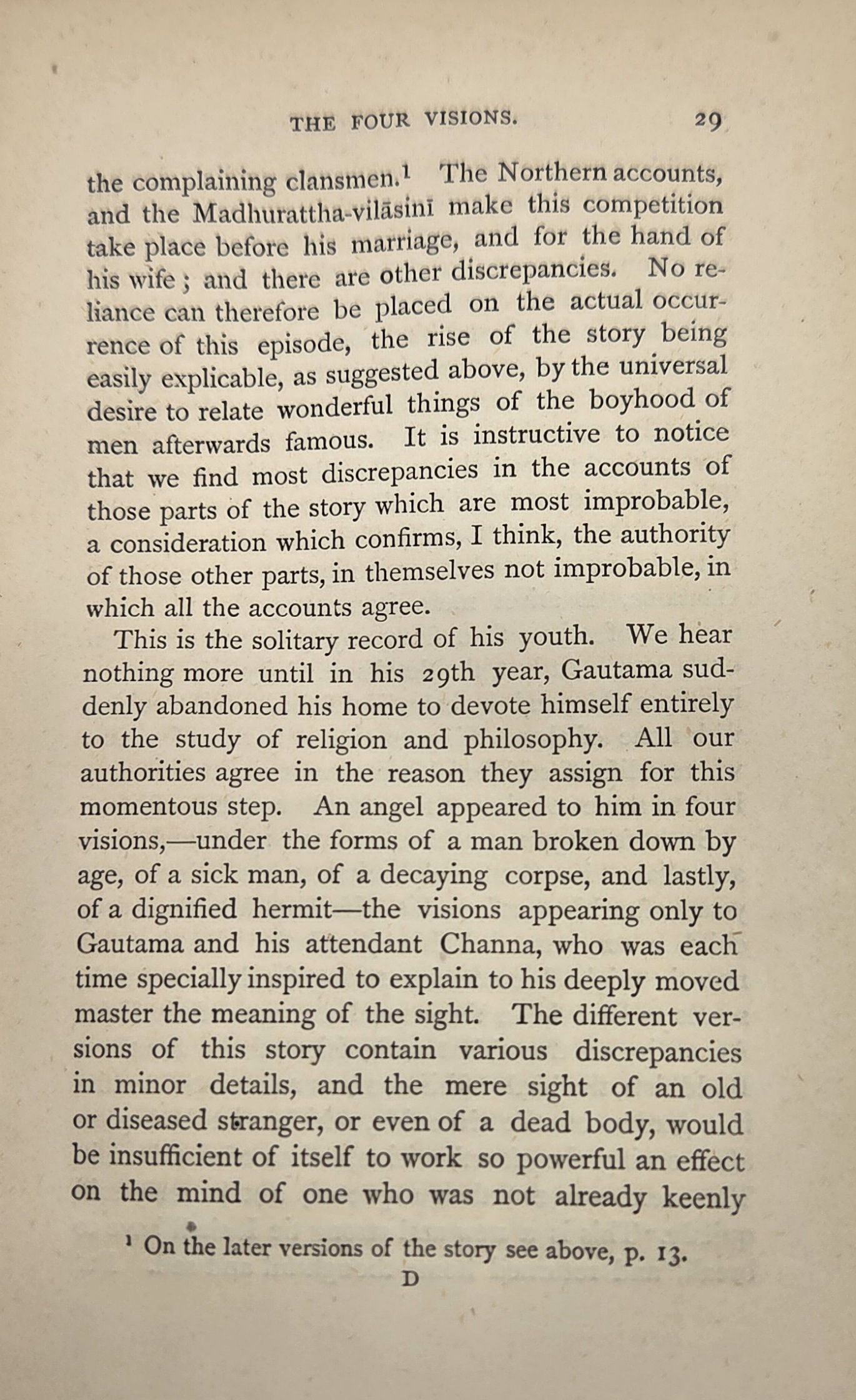
The early chapters trace the traditional life of the Buddha in a restrained, analytical tone. Rhys Davids recounts Gautama?s princely upbringing, his growing awareness of suffering, and his decisive renunciation of worldly life. The familiar episodes of ascetic practice, enlightenment beneath the Bodhi tree, and the first sermon are presented not as devotional legend but as material drawn from early Buddhist sources, carefully separated into what can be treated as historical tradition and what belongs to later embellishment.
From this biographical foundation, the narrative moves into an exposition of the Buddha?s teachings. Central doctrines?the Four Noble Truths, the Eightfold Path, the nature of suffering, impermanence, and non-self?are explained with clarity and economy. The emphasis is on ethical conduct and mental discipline rather than ritual, portraying Buddhism as a practical system aimed at liberation through understanding and self-control. Concepts such as Nirvana are treated cautiously, with attention to how they are described in the earliest texts rather than through later metaphysical speculation.
The book also explores the formation of the early Buddhist community. Rhys Davids describes the organization of the monastic order, the rules governing monastic life, and the role of lay followers, showing how the Buddha?s teaching was preserved and transmitted after his death. Attention is given to the development of Buddhist scriptures, especially the P?li Canon, and to the challenges of reconstructing early Buddhism through textual evidence.
In its later sections, the narrative widens to consider the spread of Buddhism beyond India and the emergence of different schools. These developments are treated briefly but thoughtfully, emphasizing continuity with the original teaching rather than later doctrinal divergence.
Throughout, the tone remains calm, explanatory, and comparative. The book does not attempt persuasion or devotion; instead, it aims to make Buddhism intelligible as a historical religion and ethical system. As a whole, it reads as an early bridge between Eastern religious thought and Western scholarship?compact in form, sober in voice, and grounded in close engagement with ancient sources.
Additional information
| Weight | 313 g |
|---|---|
| Dimensions | 12 × 17.25 cm |
| Author | T. W. Rhys Davids |
|---|---|
| Publisher | Society For Promoting Christian Knowledge |
| Published On | 1882 |
| Pages | 250pp & index |
| Country | London: United Kingdom |
| Language | English |
| Dimension | 12cm x 17.25cm |
| Item Weight | 313gm |
| Edition | Revised Edition |