
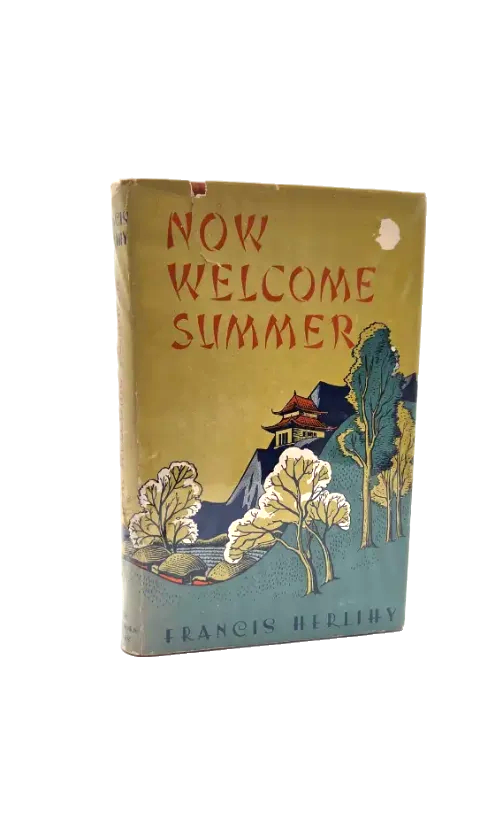
Now Welcome Summer unfolds as a reflective, first-person narrative rooted in Francis Herlihy’s years as a Catholic missionary in East Asia, primarily Korea, during the tense decades surrounding the Second World War. The book is not a travelogue in the light, picturesque sense, nor a purely religious treatise. Instead, it reads as a lived chronicle of endurance, faith, cultural encounter, and historical disruption.
Herlihy describes daily missionary life with close attention to atmosphere and detail: the rhythms of village routines, the physical hardship of travel, the fragility of health, and the slow work of building trust across language and cultural boundaries. His tone is observant and restrained, often practical, yet marked by moments of quiet lyricism when he reflects on landscapes, seasons, or human resilience. Korea emerges not as a backdrop but as a living presence, its people, customs, and social structures portrayed with a mixture of admiration, curiosity, and the limitations of an outsider’s perspective.
As the political climate darkens under Japanese rule and then wartime conditions, the narrative shifts from pastoral routine to uncertainty and moral tension. Herlihy recounts surveillance, restrictions, fear, and displacement, showing how global conflict intrudes into the most local and intimate corners of life. Missionary work becomes precarious, and the author grapples with questions of obedience, survival, and responsibility, to his faith, to the communities he serves, and to his own conscience.
The title Now Welcome Summer functions symbolically rather than literally. It suggests a posture of hope after privation, a willingness to accept renewal after long hardship. By the book’s close, Herlihy does not offer triumph or neat resolution; instead, he leaves the reader with a sober sense of historical witness and a tempered optimism rooted in endurance rather than certainty.
Overall, the book is a blend of memoir, historical testimony, and spiritual reflection, quietly human in scale, shaped by world events, and grounded in the everyday realities of life lived far from home in extraordinary times.
Additional information
| Weight | 427 g |
|---|---|
| Dimensions | 13.5 × 20.5 cm |
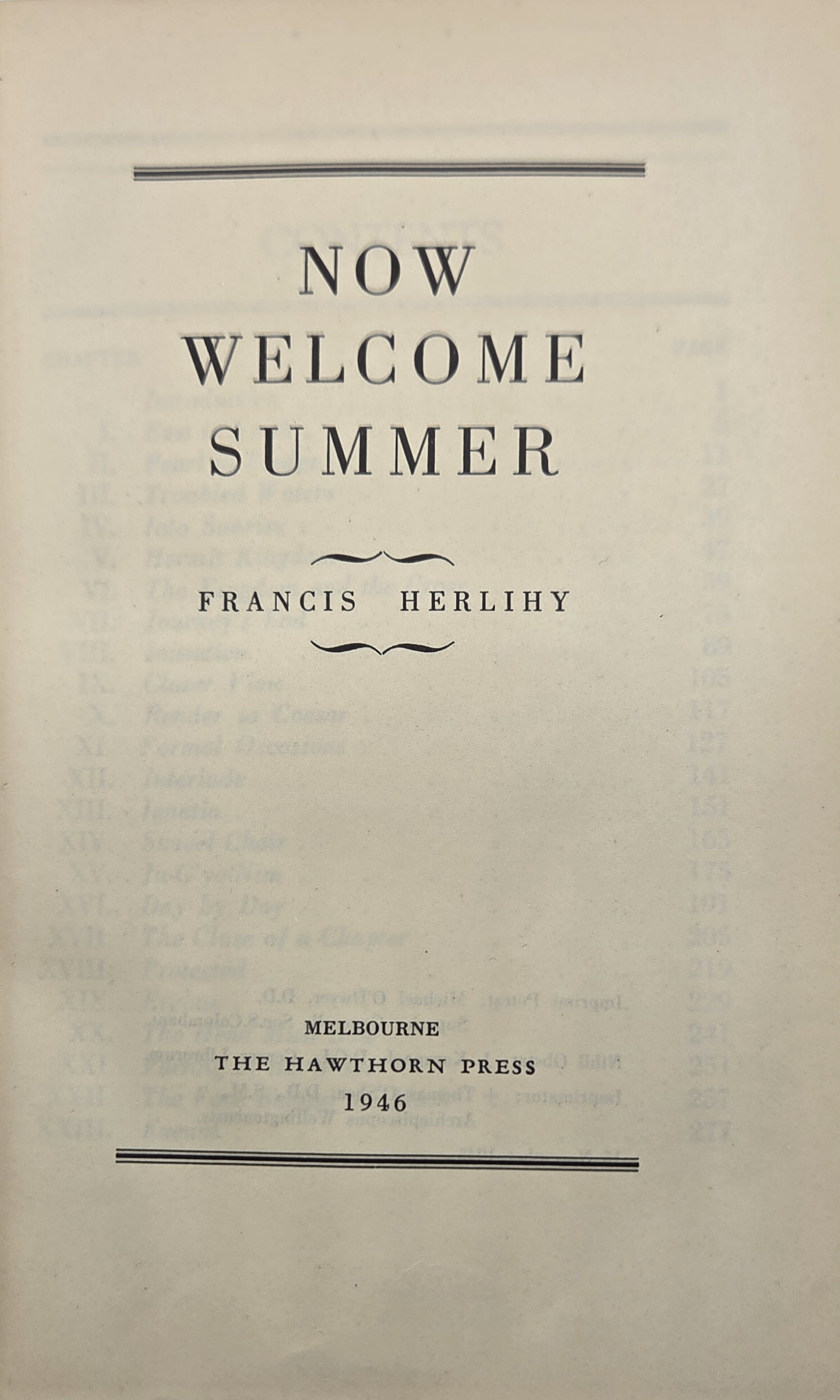
| Author | Francis Herlihy |
|---|---|
| Publisher | The Hawthorn Press |
| Published On | 1946 |
| Pages | 287 |
| Country | Melbourne: Australia |
| Language | English |
| Dimension | 13.5cm x 20.5cm |
| Item Weight | 427gm |
| Edition | First Edition |