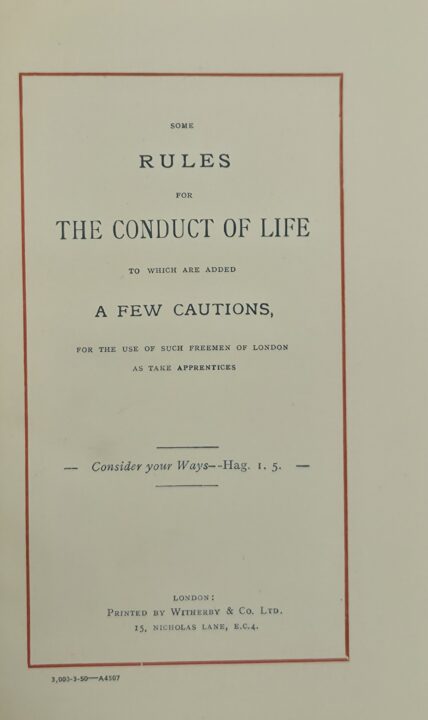
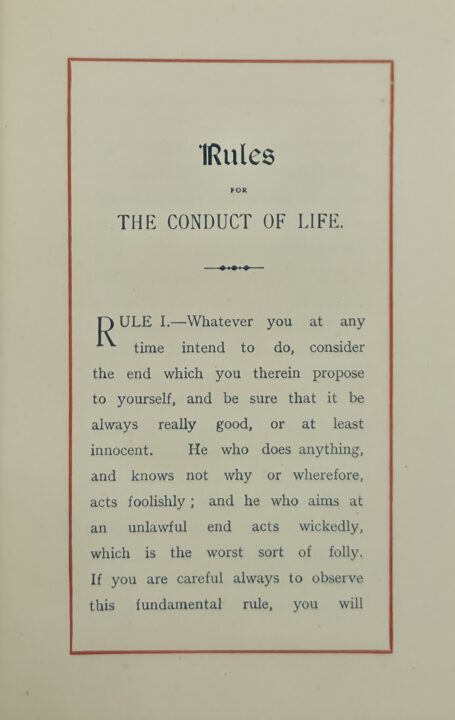
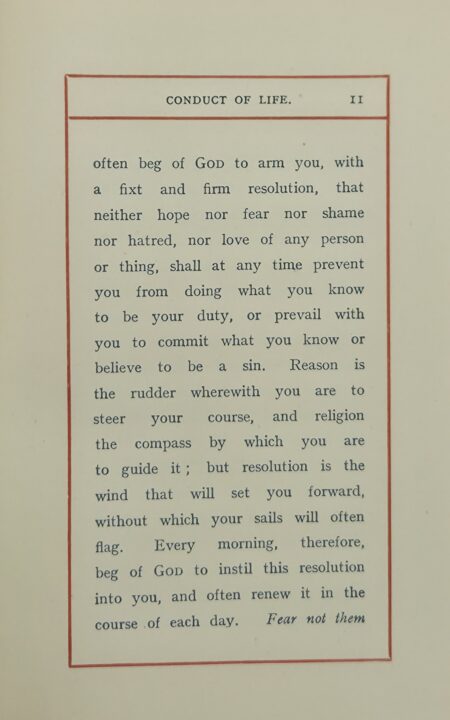
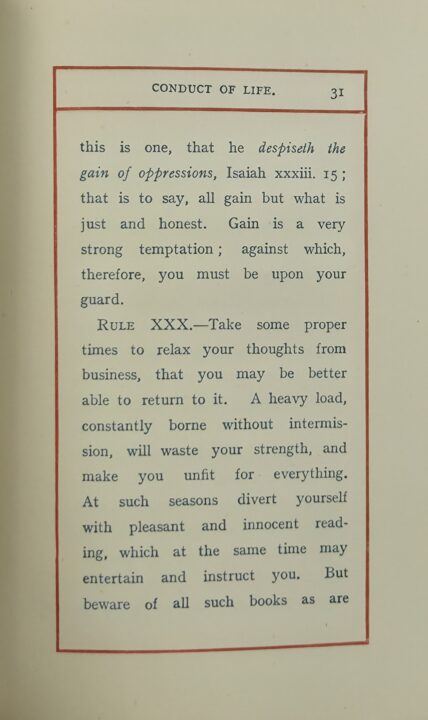
This short 18th‑century booklet presents a succinct collection of moral and practical maxims intended to guide the behaviour of apprentices and journeymen in the City of London as well as freemen of the Guilds. The text begins by listing a series of “Rules for the Conduct of Life,” such as punctuality, sobriety, truthfulness, diligence and respect for one’s master and employer. These are accompanied by a second section of “Cautions” directed specifically at freemen who take apprentices, warning against neglecting proper oversight, failing to pay stamp duty, or enrolling unsuitable apprentices. The tone is authoritative and pragmatic: the aim is to maintain individual honour, workplace discipline and the moral reputation of the trade community. Although brief (just a few dozen pages) the work reflects a culture where social and professional status were tightly linked to virtue and conduct. It served not only as a moral handbook, but also implicitly reinforced the values and structure of the guild‑based urban economy. While many of the exhortations sound familiar today – “be honest,” “work diligently,” “treat others fairly” – the historical context gives them a particular weight as part of the self‑governing regulation of trade and apprenticeship in Georgian London.